

SUSTAINABILITY
SUSTAINABILITY
ENGINEERING DURABILITY
Circular Sustainability
Through Durable Slurry Pump Design
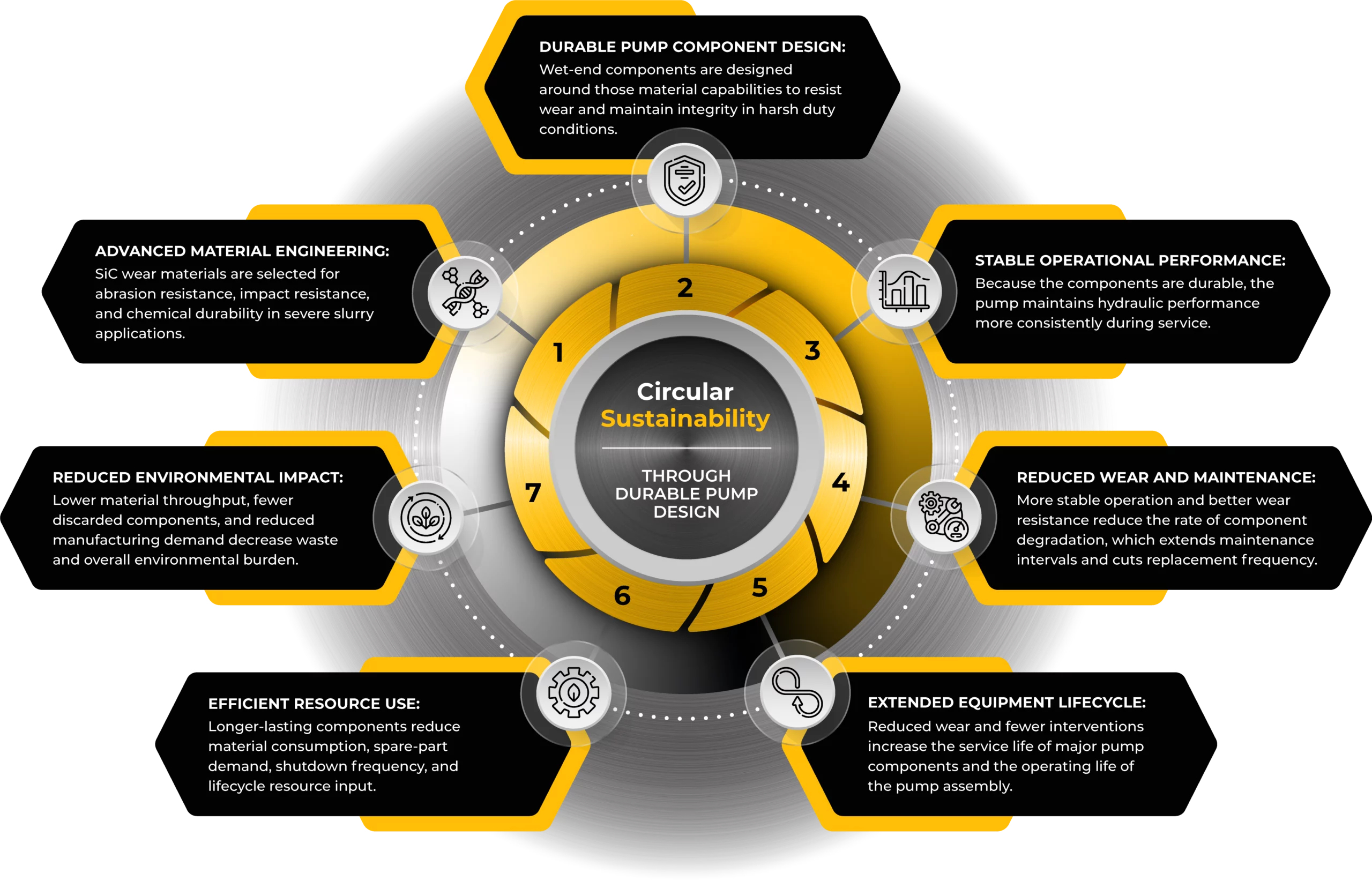
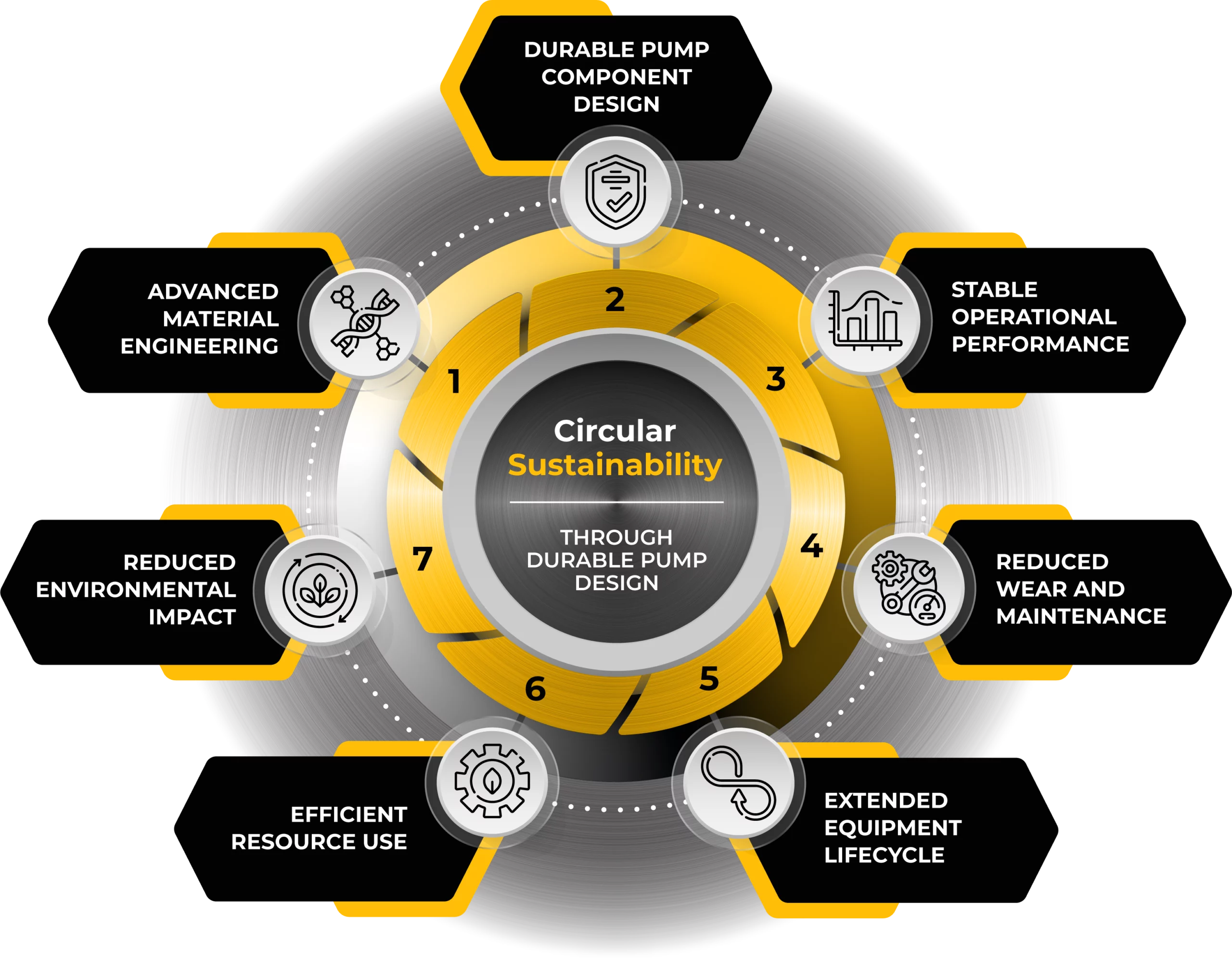
The lifecycle diagram below shows how sustainability in slurry pump systems is achieved through engineering durability.
The relationship is sequential: advanced material selection supports durable pump components, durable components support stable operation, stable operation reduces wear and maintenance, lower wear extends service life, longer service life improves resource efficiency, and improved resource efficiency reduces environmental impact.
1. Advanced Material Engineering
High-performance silicon carbide (SiC) wear materials are selected for abrasion resistance, impact durability, and chemical stability in severe slurry duty. Material selection establishes the wear performance baseline for the pump’s critical components.
2. Durable Pump Component Design
Wet-end components are designed to maintain structural and hydraulic integrity under abrasive and corrosive operating conditions. The design stage converts material capability into component durability suited to high-wear slurry service.
3. Stable Operational Performance
Durable components retain fit, profile, and function more effectively during operation. This helps the pump maintain more consistent hydraulic performance over time in demanding process environments.
4. Reduced Wear and Maintenance
Improved wear resistance slows component degradation during service. Lower wear rates extend maintenance intervals, reduce change-outs, and decrease the frequency of unplanned maintenance intervention.
5. Extended Equipment Lifecycle
Reduced degradation increases the service life of pump components and related assemblies.
Longer operating life improves lifecycle performance before refurbishment or replacement becomes necessary.
6. Efficient Resource Use
Longer-lasting components reduce spare consumption, maintenance intervention, and lifecycle material demand.
Fewer replacements are required per operating hour across the pump lifecycle.
7. Reduced Environmental Impact
Lower material throughput and reduced component waste decrease the environmental burden associated with pump operation.
Environmental improvement is therefore the outcome of extended component life and lower lifecycle consumption.